
To Colorize the Moonrise...
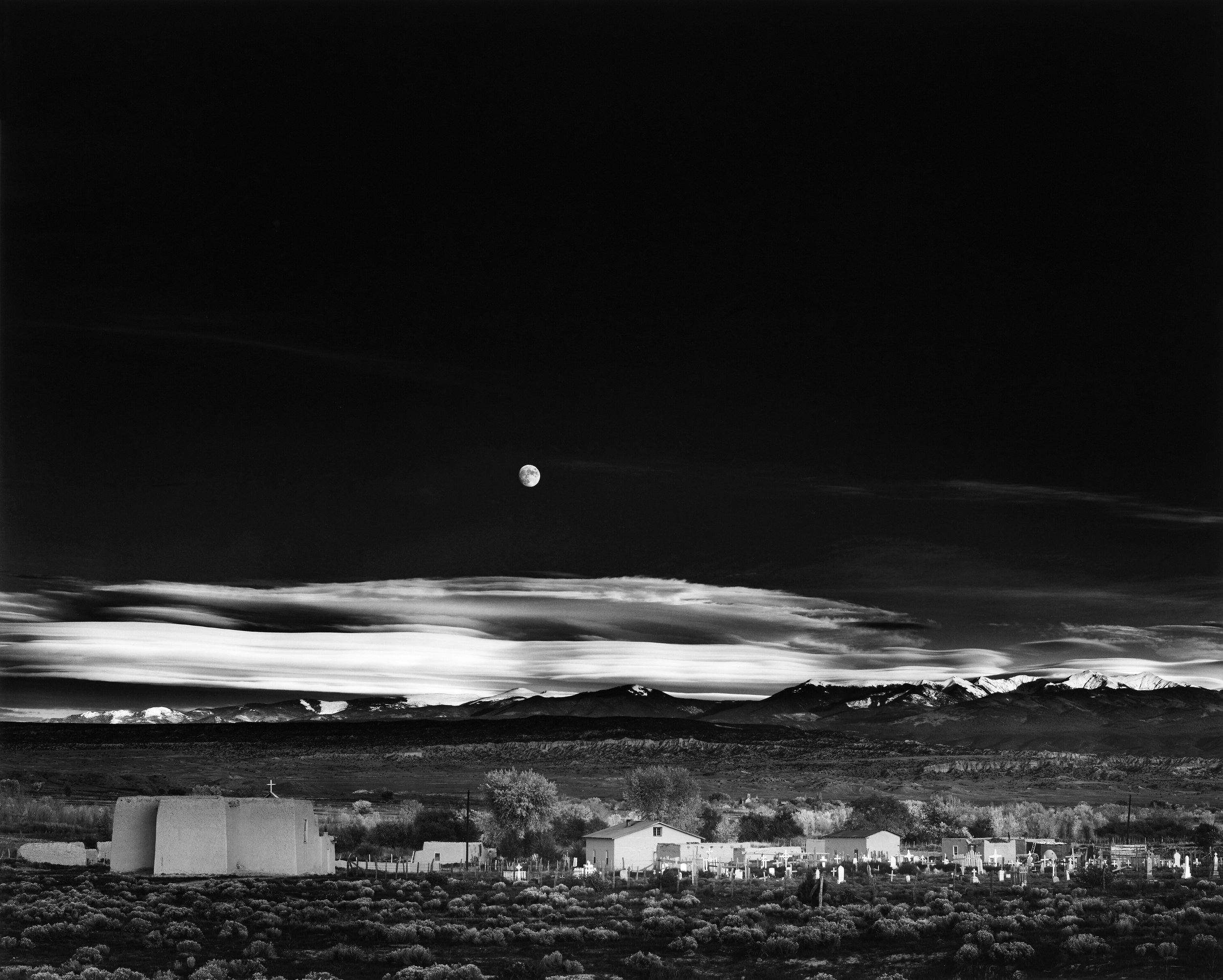
Moonrise, Hernandez, New Mexico 1941 by Ansel Adams
As originally created by the photographer
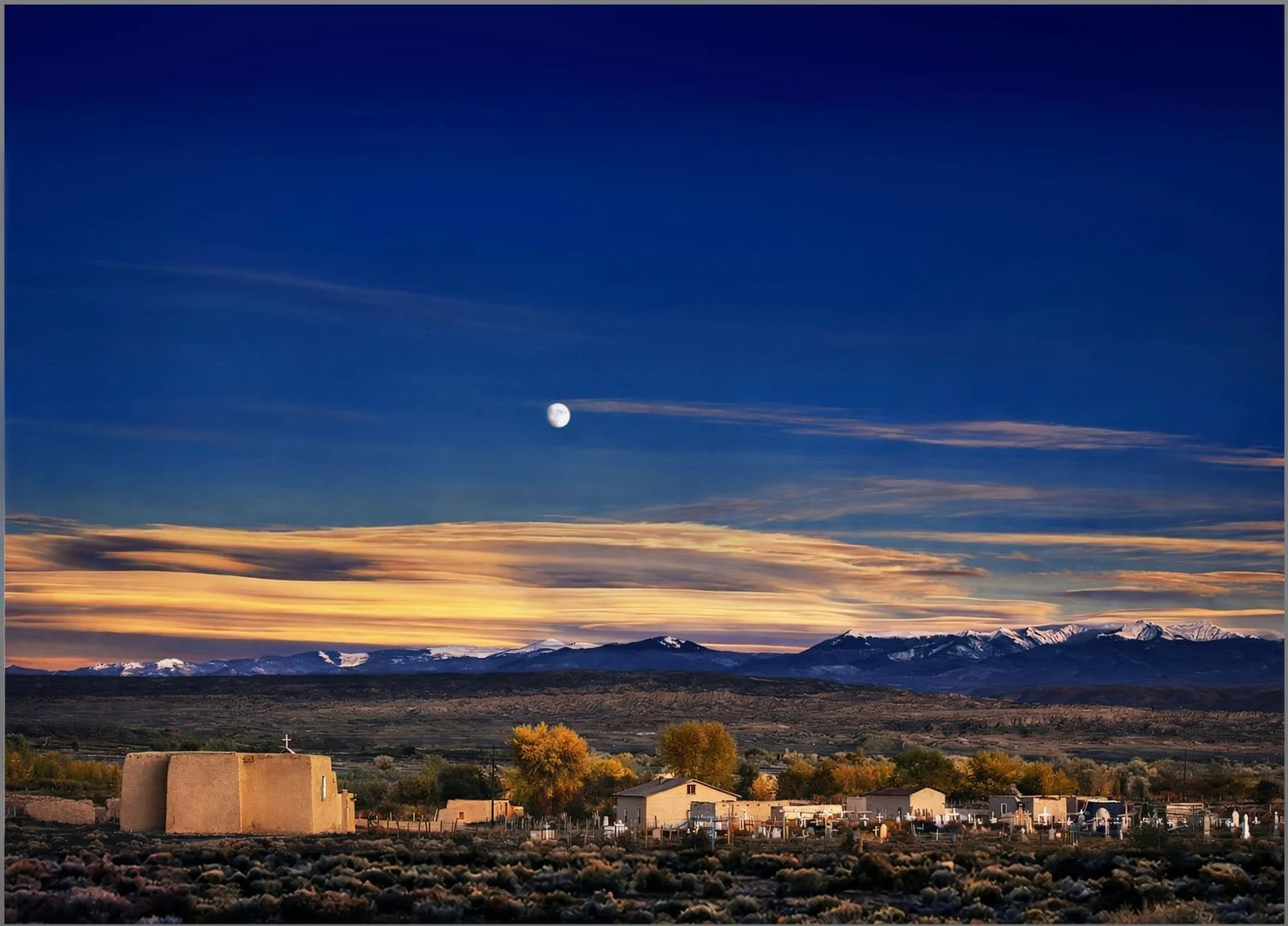
There are moments in the long erosion of culture when one senses not merely change, but the quiet loosening of an older covenant. I felt something of that unease reading of the colorized version of Ansel Adams’ Moonrise, Hernandez, New Mexico, unveiled beneath the bright and restless lights of a New York photography art fair. Someone, at last, had taught the machine to dream in color over one of photography’s most austere and sacred silences.
The custodians of Adams’ legacy objected swiftly. The Ansel Adams Publishing Rights Trust condemned the work as “a gross failure of ethical and professional judgment,” and perhaps there is wisdom in that severity. They spoke not merely of copyright, but of dignity, of stewardship, of the ancient human understanding that creation bears the imprint of the creator long after law relinquishes its grasp. They argued that no one should traffic in another person’s labor and vision for private gain without consent, candor, or reverence.
Yet James Danziger, of the Danziger Gallery who spent months constructing the AI-colored image, answered with the confidence of legality and the language of admiration. The photograph, taken in 1941, has passed into the public domain. The law, that cold archivist of civilization, no longer bars alteration or reproduction. Danziger insisted his effort arose from love, from a desire to imagine what Adams himself may have seen that evening while driving along Highway 84, about an hour from my home, when the sinking sun ignited the white crosses of the cemetery and the moon rose suddenly over the luminous New Mexican clouds.
And there, perhaps, lies the central tension. The law asks what may be done. Conscience asks what should be done.
We have become increasingly adept at confusing permission with virtue. The modern mind often assumes that if a gate stands open, no trespass can occur. But art is not merely property. It is evidence of a singular consciousness moving through time. Adams chose black and white not because color photography was unavailable, but because monochrome was the language through which he interpreted existence itself. His landscapes were never simple records of geography. They were meditations on permanence, solitude, and light. To add color after the fact is not merely to restore something missing. It is to revise a sentence deliberately written in another tongue.
.jpg)
Moonrise, Hernandez, New Mexico 1941 by Ansel Adams
Colorized using AI technology by Danziger Gallery
One hears echoes of older acts of “improvement.” The fig leaves placed upon Renaissance statuary. The repainting of medieval icons. The trimming of difficult passages from books to suit the sensitivities of a later age. Civilization has always possessed an impulse to tamper with inheritance while calling the act enhancement.
Legally, Danziger may stand on firm ground. The failure to renew the copyright decades ago left the image vulnerable to the freedoms of the public domain. The law recognizes expiration dates; morality rarely does. A creative work remains haunted by its maker long after documents lapse in courthouse drawers. Somewhere behind every great work lingers the invisible boundary of intention.
What troubles me most is not the technology itself. Tools are innocent. The stone axe and the telescope emerged from the same restless human hand. Artificial intelligence, too, will become another extension of appetite and imagination. What matters is the spirit in which it is used. Increasingly, our age approaches art not as inheritance but as raw material. Everything is available for revision, monetization, repackaging. The question ceases to be whether something possesses integrity and becomes instead whether it can generate attention.
Ansel Adams spent his life waiting for rare convergences of weather, light, and human patience. Moonrise, Hernandez was not accidental. It was an encounter between discipline and mystery. The photograph endures because Adams recognized that the world had briefly arranged itself into revelation. To alter such a work without necessity feels less like homage than interruption and even disrespect..
Perhaps that's old-fashioned. Perhaps honor itself has become unfashionable in a civilization increasingly governed by market permission rather than restraint. Yet I cannot escape the feeling that certain works ask something of us beyond consumption. They ask reverence. They ask that we leave some things untouched, not because we are forbidden to alter them, but because restraint is itself a form of respect.
The machine can color the moonrise. It cannot understand why Adams left it in shades of grey.